 Prajavartha Online Telugu News
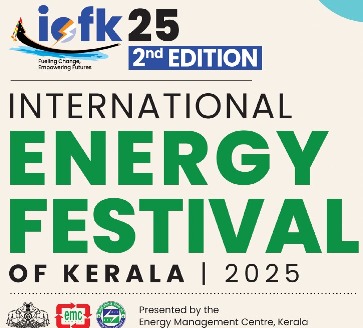
-(IEF)Calls for Strengthened Energy Efficiency Initiatives.
-Urged SDA’s to support National Energy conservation movement for Economic growth and addressing Climate Change.
-The Urgency of Climate Action, BEE’s Target for 2030: 150 Million Tonnes of Oil Equivalent (Mtoe) Savings
-IEFK 2025 Appreciates Govt of Kerala for taking initiative of making the State as Carbon Free State by 2050.
Thiruvananthapuram, Neti Patrika Prajavartha :
The three-day International Energy Festival of Kerala (IEFK-2025), held from February 7-9, has urged all State Designated Agencies (SDAs) to play a pivotal role in advancing energy efficiency and supporting the Bureau of Energy Efficiency’s (BEE) nationwide mass movement to combat climate change and protect the planet.
BEE has implemented stringent measures to enhance energy efficiency, which contributes over 40% to climate change mitigation efforts. Notably, as of January 2024, the Standard & Labelling (S&L) Program alone—covering 35 energy-efficient appliances—has resulted in 81.64 billion units of energy savings, translating to cost savings of approximately ₹54,324 crores and a reduction of 58 million tonnes of CO2 emissions. The Southern states, particularly Andhra Pradesh and Telangana, have played a key role in promoting star-rated energy-efficient appliances, particularly in the domestic sector.
To accelerate energy efficiency and reduce greenhouse gas emissions, BEE has set a national target of saving 150 Mtoe by 2030.
Experts at IEFK-2025 emphasized the importance of public-private participation and comprehensive communication strategies to sustain the momentum of energy conservation efforts.
In the 21st century, climate change and environmental degradation remain among the most pressing global challenges. The energy sector alone accounts for nearly 75% of global greenhouse gas (GHG) emissions, primarily due to fossil fuel combustion. Without urgent intervention, global temperatures could surpass the 1.5°C threshold set by the Paris Agreement, leading to irreversible environmental and economic consequences.
According to the World Health Organization (WHO), air pollution is the leading environmental health risk, contributing to respiratory and cardiovascular diseases, lung cancer, and strokes.
During IEFK-2025, which saw huge participation from national and international representatives, Global Experts commended Indian Prime Minister Shri Narendra Modi for introducing the LiFE (Lifestyle for Environment) movement at COP26 in Glasgow. This initiative promotes mindful and sustainable consumption to protect and preserve the environment. The Indian government has launched various initiatives to encourage environmentally responsible living and mass participation in climate action.
India has further reinforced its climate action strategy with the launch of two key guidelines under BEE:
• Detailed Procedure for Compliance Mechanism
• Accreditation Procedure and Eligibility Criteria for Carbon Verification Agencies
These guidelines aim to strengthen India’s Carbon Market Framework (ICM) and support its commitment to reducing the emission intensity of its GDP by 45% by 2030 and achieving net-zero emissions by 2070. BEE has organized stakeholder workshops in Hyderabad, Bhubaneswar, Mumbai,Chandigarh and Vishakhapatnam to engage industries, including steel, cement, textiles, and paper, in the carbon credit market.
Key Features of India’s Carbon Market:
• Carbon Credit Trading Scheme (CCTS): Established under the 2022 amendment to the Energy Conservation Act, enabling trading of carbon credits to incentivize emission reductions.
• Compliance Mechanism: Industries exceeding emission reduction targets earn carbon credits, while those failing must purchase credits to offset their emissions.
• Offset Mechanism: Renewable energy and other low-carbon projects can voluntarily participate, expanding the carbon credit pool.
• ICM Portal & Regulatory Oversight: Developed in collaboration with the Central Electricity Regulatory Commission (CERC) to ensure transparent carbon trading.
By fostering an efficient carbon market, India is laying the foundation for a sustainable, low-carbon economy.
The IEFK-2025 extended special commendations to Shri K.R. Jyothilal, Additional Chief Secretary, Department of Power, Government of Kerala, for implementing long-term measures to position Kerala as a carbon-free state, ensuring a sustainable future for coming generations.
KR.Jyothi Lal explained about Kerala’s ambitious plans to achieve carbon neutrality by 2050 and 100% renewable energy by 2040. He also highlighted the Kerala GHG Inventory and the Kerala GHG Portal, created by the Directorate of Environment and Climate Change (DoECC) with the Vasudha Foundation. This portal was launched by Kerala’s Chief Minister, Shri PinarayiVijayan, at a state-level event. KR Jyothi Lal noted the rapid growth of electric vehicles in Kerala and efforts to promote Vehicle-to-Grid (V2G) technology, including built-in sensors to enable EV charging only during off-peak hours.
Director EMC Sri Hari Kumar thanked the Bureau of Energy Efficiency (BEE) for supporting Kerala’s energy conservation efforts, which play a key role in addressing climate change and promoting sustainable development