 Prajavartha Online Telugu News
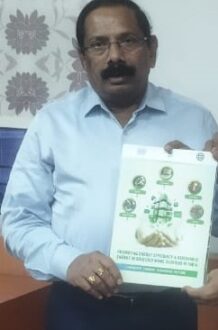
-Govt. approves APEPDCL’s proposal for the establishment of the Centre of Excellence for Energy Transition (CoEET) in Visakhapatnam.
-CoEET helps for making AP as a National leader in Energy Transition. CS.K Vijayanand
-CMD APEPDCL thanks Bureau of Energy Efficiency (BEE) for supporting the Super ECBC Building.
Visakhapatnam, Neti Patrika Prajavartha :
In a landmark step towards ensuring long-term energy security and sustainability, the Government of Andhra Pradesh has approved the establishment of the Centre of Excellence for Energy Transition (CoEET) at Visakhapatnam. The initiative, spearheaded by the Eastern Power Distribution Company of Andhra Pradesh Limited (APEPDCL), marks a significant advancement in the state’s efforts to promote renewable energy adoption, energy efficiency, and clean technology innovation.
The state’s first Super Energy Conservation Building Code (Super ECBC) building, constructed by APEPDCL at Sagar Nagar, Visakhapatnam, with an investment of ₹13.5 crore (including a grant of ₹5 crore from the Bureau of Energy Efficiency, Ministry of Power), will now be transformed into this Centre of Excellence.
The proposal was approved at the Andhra Pradesh Power Coordination Committee (APPCC) meeting held recently. Future expenditures will be shared among AP DISCOMs, APGENCO, and APTRANSCO under a collaborative model.
The CoEET, to be established as a registered society, will serve as a collaborative platform for innovation, skill development, entrepreneurship, and policy support in the clean energy sector. Its vision is to position Andhra Pradesh as a national leader in energy transition, in line with India’s energy goals and global climate commitments.
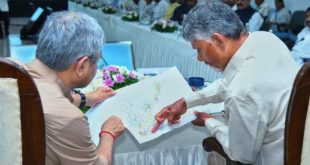
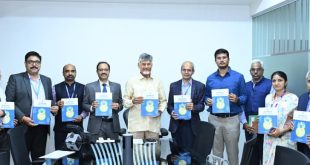
During an interaction with the CMD of APEPDCL, the Media Adviser (Southern States) of BEE, and officials of APSECM (SDA), Andhra Pradesh Chief Secretary Sri K. Vijayanand expressed confidence that the CoEET would emerge as a role model in the country for driving energy transition.
Chief Minister Sri N. Chandrababu Naidu has consistently emphasized the need for innovative and long-term programs to provide world-class power infrastructure, optimize energy costs, and support future urbanization, IT and industrial promotion, employment generation, and overall economic growth. With support from MNRE, MoP, BEE, EESL, PFC, REC, and coordinated efforts of key state departments and consumers, the energy department is committed to implementing the Integrated Clean Energy Policy (2024–29) to safeguard the interests of future generations CS said.
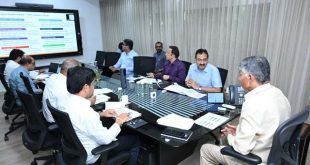
PrudhvitejImmadi Chairman and Managing Director of APEPDCL in a power point presentation on center’s future course of action informed that the CoEET will leverage the state’s coastal advantage, abundant renewable energy potential, and strong infrastructure base to:
• Foster applied research and pilot projects in clean energy.
• Build a skilled workforce through training and capacity-building programs.
• Incubate startups and promote entrepreneurship in energy technologies.
• Provide data-driven policy support and regulatory insights.
• Enable industry–academia–government collaboration to address regional and sectoral challenges.
Over the next five years, CoEET aims to:
• Undertake more than 20 applied research and pilot projects at Global Standerds.
• Train over 1,000 professionals and utility engineers.
•Incubate at least 10 clean energy startups.
• Contribute significantly to state and national energy policies.
Focus Areas of CoEET:
1. Research & Development – Renewable integration, smart grids, decentralized solutions, EV charging infrastructure, green hydrogen pilots, AI/ML for energy forecasting.
2. Skill Development & Capacity Building – Certification programs, university tie-ups, internships, fellowships, and faculty training.
3. Industry–Academia Collaboration – Joint projects, knowledge dissemination, and pilot validation of technologies.
4. Entrepreneurship Support – Startup incubation, mentorship by industry experts, and investor network access.
Expected Contributions:
• Economic development and job creation through clean energy enterprises.
• Leadership in energy transition by positioning Andhra Pradesh as a thought leader.
• Enhanced energy security, Efficiency and sustainability with reduced fossil fuel dependence.
• Strengthened policy and regulatory frameworks through research-driven inputs.
• Global collaboration and recognition by partnering with leading institutions.
• A robust knowledge ecosystem for long-term growth.
Governance Structure:
The CoEET will be registered under the Societies Registration Act. Its General body headed by Spl.CS Energy and Executive Body will include the CMDs of key power utilities and the Director (HRD), APEPDCL.
Facilities at CoEET (Super ECBC Building): Vizag.
• Innovation labs and R&D workspaces.
• Training classrooms and seminar halls.
• Startup incubation bays.
• Digital twin and smart grid simulation setups.
Funding Sources:
Internal allocations from power utilities, central government grants (MNRE, MoP, DST), industry CSR contributions, and academic collaborations.
With its strategic coastal location, operational j well-positioned to emerge as a national hub for clean energy manufacturing, deployment, and exports.
The Government of Andhra Pradesh has emphasized that the CoEET will serve as a knowledge and innovation hub, enabling the state to play a pioneering role in India’s clean energy transition and contribute meaningfully to the global fight against climate change.
Prudhvi tej thanked, BEE for selecting Vishakhapatnam and extending support for completion of Super ECBC Building which ensures to achieving around 50 percent energy savings.